
Principle #4: Your Plans Might Not Work
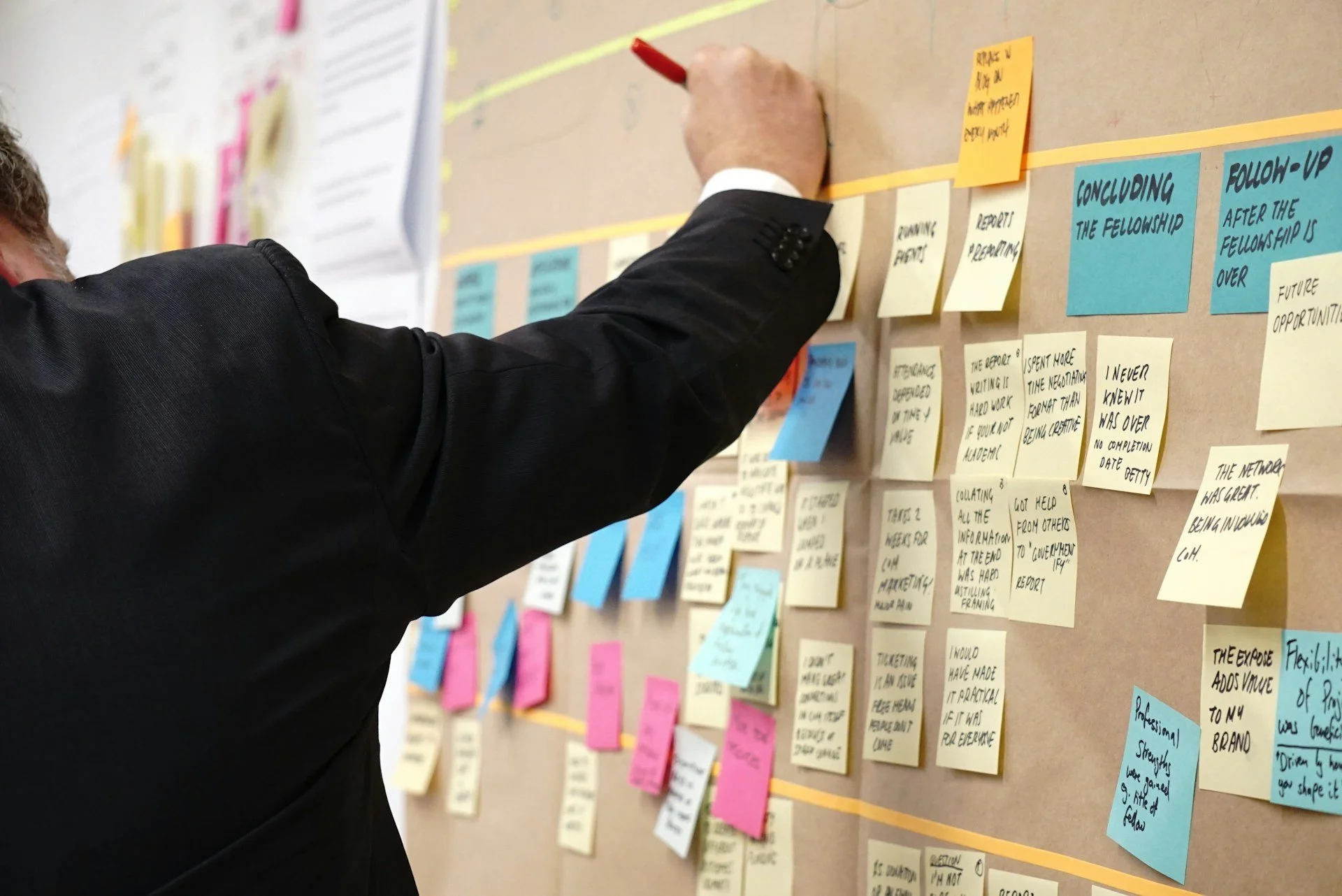
The Best Laid Plans...
I'm a planner. I want to see a structure. A framework. I want to know when, how, why, what. Show me the steps. In order would be nice. Step 1, then Step 2, then Step 3.
I struggle with intuiton. I struggle with spontaneity. I struggle with going with the flow. I will probably not continue with something if I don't understand it.
Let me tell you. It has taken me a long time to adjust to somatic work. For the most part, nothing has proceeded like I originally planned it to. Not close. I still get frustrated often.
I think a healthy balance is somewhere in the middle, depending on the clients' needs, from session to session, activation to activation.
Not too exploratory, but not too structured.
Not Too Exploratory:
Holding an intention, focus, and sense of structure for somatic work is beneficial.
For Helping The Client To Continue Forward
Some practitioners only talk about "exploring". It is all about the "journey." There is no real framework. This can make a client feel they are never getting anywhere. They have no clear markers to see that they have made progress. Understanding some level of a system and of steps that might happen in healing can be crucial for a client to continue in this work. Some of us requre more understanding and depth to feel safe. We need to see some signs along the way to build our trust in the process. Some of us need to be reminded frequently that this is a long, slow, process, especially for complex trauma. It is a life-long process, really. Without understanding this, we will not continue showing up to sessions.
For Reducing Overwhelm and A Sense of Deficiency
Sometimes, when we find our first few parts, the System opens up. Within a few sessions, there is this awareness that our subconscious is holding TONS of parts. If there is no structure or focus here, things can quickly become overwhelming. You can go bouncing around from one to another to another, as one part pops up, then another takes your attention, then another. It can be very tiring. It can perpetuate the belief that the client may already think, that they are broken, too complicated, or too difficult to ever make any progress.
It's fine if the first couple of sessions are a bit all over the place. Hopefully, though, the client and practitioner can soon start to see some patterns, some groupings of parts, and some dynamics that keep showing up. Notes, pictures, and diagrams can really be helpful here. Can we help the client clearly identify their exiles, managers, firefighters? Can we show them how they are working with each other, or perhaps in opposition to other parts? When we make this more clear to our clients, then they can start to catch it outside of sessions and start to disidentify and unblend more easily from these parts on their own.
As the client's System becomes clearer, then the client can start deeper focusing on one part at a time.
As Self Therapy, by Jay Earley, page 225 says,
"Plan to stay with the target part you have chosen, unless you have a good reason to switch to a different target part."
We chose a target part. From my understanding, we would stay with the target part, instead of bouncing around every few minutes to another part that shows up. We would get to know this target part following the 6 F's of IFS: Find, Flesh Out, Focus, How Client Feels Toward Part, Befriend, Address The Fears.
If other parts of the body become activated, basically, we keep asking these other protectors, concerned parts, etc, to step aside if they are willing to. We let them know that they are important and we will get to know them, but right now, the target part is who we are getting to know. If a part does not step aside, then sometimes it is necessary and helpful to explore that part first.
Not Too Structured:
A rigid plan often does not work.
Your body, on its own, will often bring up whatever it feels you are ready to work through in session.
A bunch of times in my personal sessions, I have had a plan of finding this part first, then working on this part, then saying these things for that other part. It usually was not helpful.
For Allowing Current Activation
For example: The session you had last week might have brought up a lot of grief, maybe tenderness. But, this week, you have an experience with your parents. It triggers developmental trauma wounds, and you feel really frustrated and angry.
You come into the session today revved up and angry, perhaps feeling it in your jaw, face, chest, fists, arms. That is what is present today. If you have a fixed plan that you need to get back to feel the grief you felt last week, it will probably not work too well.
We would most likely explore the anger. Now, it might naturally unfold into grief, shame, sadness, tenderness, who knows? But we are witnessing the anger first, this current activation, and following wherever the body leads.
Or you may have a plan to work with a part that was really clear and active last session. Today, though it seems that nothing much is happening there. A different part of the body just feels more important and ready for you today. Like it is there waving, wanting to be seen and be given attention. So instead of being inflexible, it might be helpful to follow the body's active part for today.
For Fatigue
From personal experience, as an autistic and C-PTSD client, I often come to sessions quite tired. Life is tiring. Relationships are tiring. Social demands are tiring. Different parts fighting each other and bracing my body for decades is very tiring.
If I show up for my session, and my practitioner is always asking me to identify and label parts, to stick to a plan or protocol, or bouncing around too much as they follow my own System, it doesn't feel good. It doesn't feel safe. It does not feel like a place of rest. I need a safe space that feels gentle and restful and not forced.
So especially on these days, is an exploratory, flowing, no-expectation, no-plan, no-demand session really what I need.
Summary:
Sure, some days I want to understand. I want the explanations. I want to see my practitioner putting effort into teaching me and clarifying things. Show me some structure.
And some days, I want none of it. Don't send me any notes afterwards. Don't ask me too many questions. Don't give me any advice you think is helpful.
Just be here, present, with me.
Gently, easily, slowly, quietly.
It's a delicate balance that can be difficult. Like most things, it is not black and white. It is on a spectrum.
Sometimes structure. Sometimes exploration. Sometimes both. Sometimes not much of either, but just listening, witnessing, and just presence.
As trust and attunement is built between the client and their practitioner, it should get easier hopefully. Also, as the client learns to just tell the practitioner, "I really would like you to do this today." "I need this kind of a session today." Or, "Please, don't do the thing like last time. That didn't work for me."
Application:
- Do you feel that your practitioner has a healthy balance here? Do they provide you with the education that you need to continue showing up for sessions? Or do they dismiss you when you ask for clarity?
- Do you feel like you are just spinning your wheels with similar patterns showing up over and over, but nothing really changing for a long time? Might your practitioner need to offer you some more structure?
- Do you feel that your sessions feel strict, cramped, or tight? Might your practitioner need to offer you more space, more opportunities to explore, more curiosity?
- If you tend to gravitate toward wanting structure, would you be willing to be try a few sessions that are open-ended and loose?
- If you tend to gravitate toward wanting very fluid sessions, might you be willing to try a few planned sessions, maybe working on specific things-boundaries, a new regulation practice, a new technique?
- How are we doing if we are a practitioner?
- Do we help our clients feel that the sessions can be a place of rest? Ease? Non-figuring-out?
- Can we provide a gentle structure in a way that doesn't overwhelm an already overwhelmed client?
- Can we be flexible with our client from session to session, layer to layer?